The Multi-Arm Multi-Stage Advantage: Transforming Multiple Sclerosis Trials
The Multi-Arm Multi-Stage Advantage: Transforming Multiple Sclerosis Trials
What if clinical trials could evaluate multiple treatment approaches at the same time and adapt as evidence emerges?
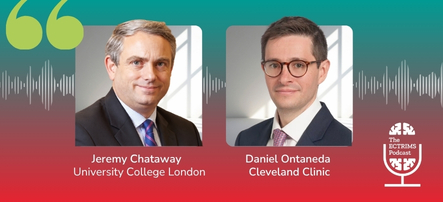
In this episode of the ECTRIMS Podcast, host Brett Drummond speaks with Prof. Jeremy Chataway of University College London and Prof. Daniel Ontaneda of Cleveland Clinic about multi-arm, multi-stage clinical trials and their potential to make MS research more efficient and responsive.
The episode comes at an especially timely moment. This week, interim results from the OCTOPUS trial showed that alpha-lipoic acid will progress to the next stage of the trial, while the metformin arm will be stopped. These results provide an early demonstration of the adaptive approach discussed in this episode — although the conversation itself was recorded before the interim results were available.
Together, they discuss:
- How multi-arm, multi-stage trials differ from traditional clinical trial designs
- Why these approaches could be particularly valuable in progressive multiple sclerosis
- How a single trial framework can allow promising treatments to advance while less promising approaches are stopped
- The potential benefits for recruitment, participant experience and reducing the time between trial phases
- The statistical and practical challenges involved in designing and running these complex studies
- How interim outcomes, imaging and biomarkers could help identify promising treatments earlier
- What the OCTOPUS trial is investigating — and how its design is being used to evaluate potential treatments for progressive MS
- Whether the same approach could be used to accelerate the development of remyelination and repair therapies
As the first OCTOPUS interim results now show, the adaptive design discussed in this episode is not simply theoretical. This episode offers a particularly relevant look at the thinking behind the trial and the methodology being used to determine which treatments should move forward and which should not.
This podcast episode is supported by an educational grant from Alexion, AstraZeneca Rare Diseases, Bristol Myers Squibb, Roche, Sanofi, and UCB. Educational grant providers have no input into the podcast series content.