Predicting MS: Can Data Bring Us Closer to Personalised Care?
Predicting MS: Can Data Bring Us Closer to Personalised Care?
What if we could better predict how multiple sclerosis will progress in an individual — and which treatment strategy is most likely to work for them?
As large-scale clinical and real-world datasets grow, researchers are gaining new opportunities to examine MS across longer periods, more diverse populations and entire treatment journeys. But turning that data into reliable predictions for individual patients remains a major challenge.
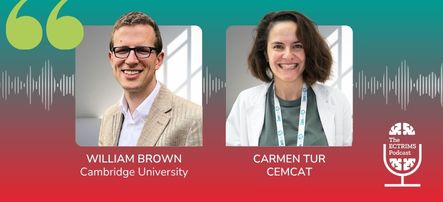
In this episode of the ECTRIMS Podcast, host Brett Drummond speaks with Dr. Will Brown and Dr. Carmen Tur about how predictive modelling and large-scale data could bring us closer to truly personalised MS care.
Together, they discuss:
- Why the biological and clinical heterogeneity of MS makes prediction so difficult
- How large real-world datasets are changing what researchers can investigate
- The challenges of missing data, non-random treatment allocation and defining meaningful clinical outcomes
- How AI and machine learning could contribute — and why a good model still begins with the right clinical question
- How underrepresentation in datasets could deepen existing health inequalities
- What must happen before predictive tools can meaningfully influence treatment decisions in clinical practice
The potential is significant. But as Will and Carmen explain, accurately predicting an outcome is only the beginning — the ultimate test is whether using that prediction actually improves care.
This podcast episode is supported by an educational grant from Alexion, AstraZeneca Rare Diseases, Bristol Myers Squibb, Novartis, Roche, Sanofi, and UCB. Educational grant providers have no input into the podcast series content.